
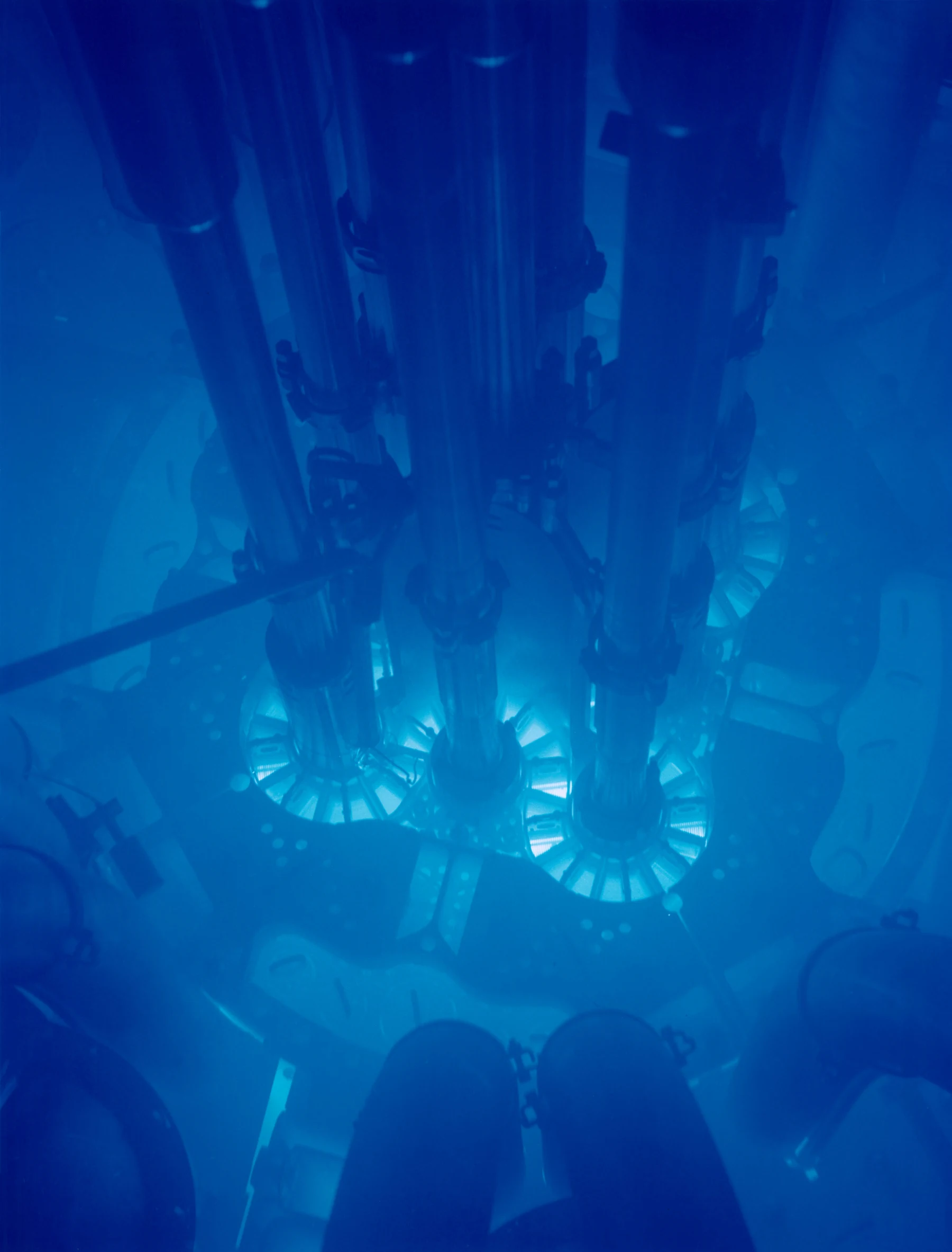
Why nuclear?
We already get much of our electricity from the sun, wind and water. What could reactors add? And what would we need to resolve before using them?
How it works
How can such a small pellet hold so much energy?
The difference is in the uranium atoms. Splitting them releases far more energy than a chemical reaction such as burning coal.
The process is called fission, and a power plant uses the heat it releases to make steam. That steam turns a turbine connected to a generator, producing electricity much as it does in other thermal power plants.
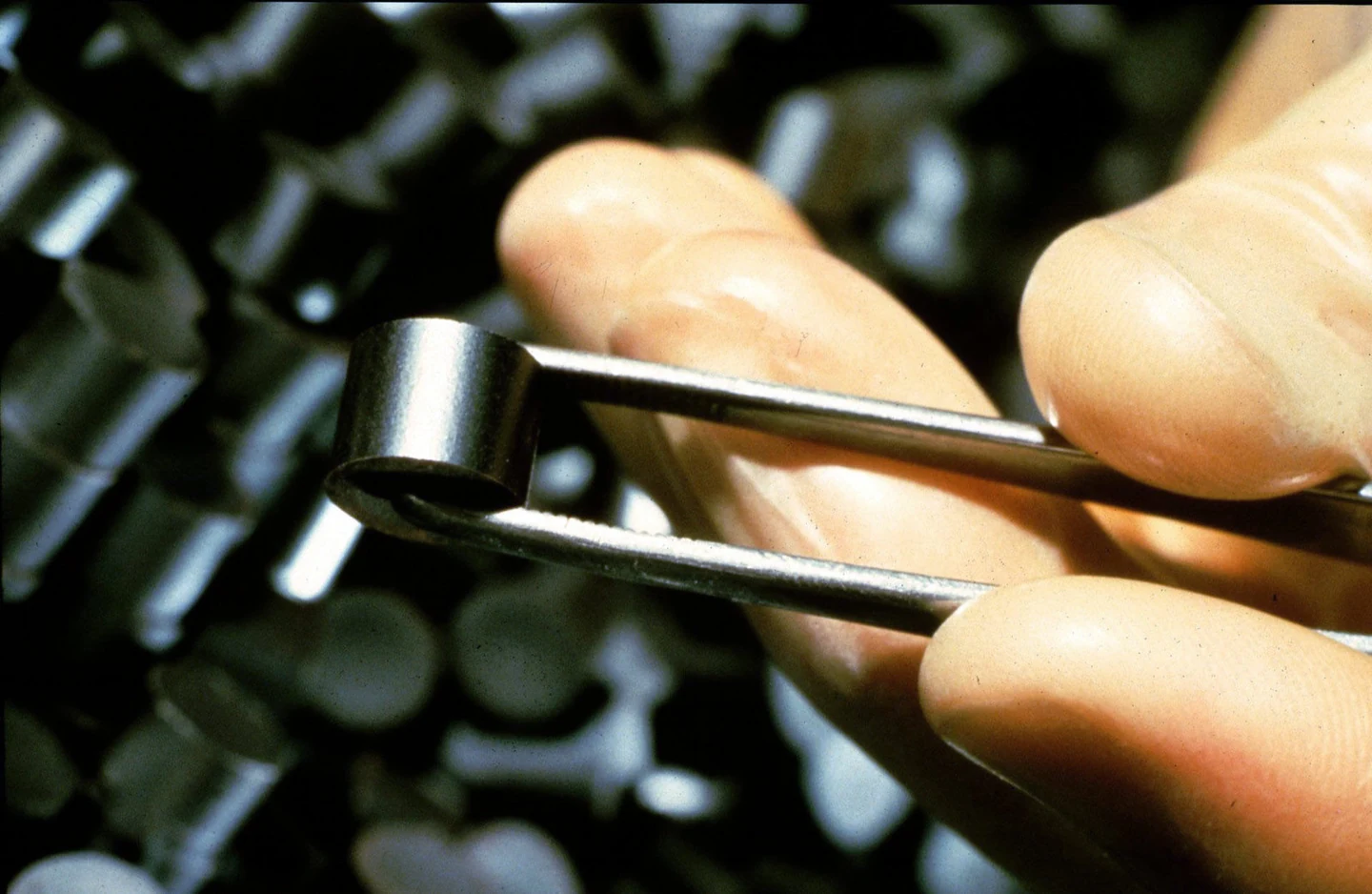
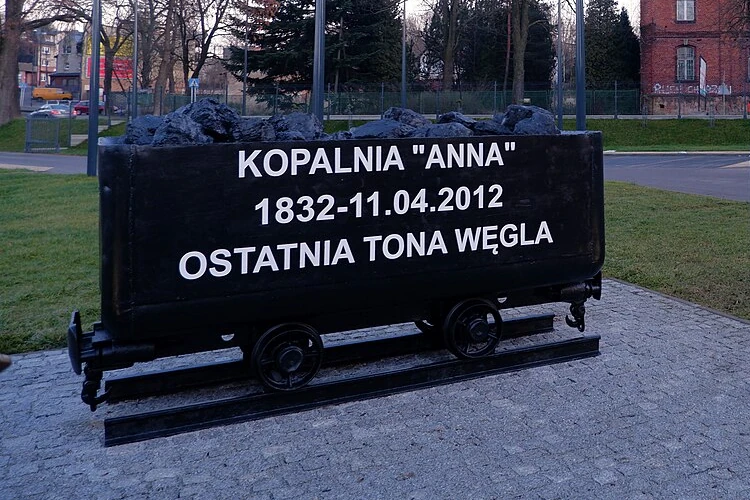
According to the US Department of Energy, one pellet can release roughly as much energy as 1000 kg of coal. This helps explain why so little fuel is needed. The comparison depends on the fuel and reactor.
In practice, there is less fuel to transport and it is possible to keep reserves for long periods. Uranium still has to be mined and prepared, the plant built and the spent fuel managed.
Needing little fuel is an advantage. It does not remove mining impacts or responsibility for spent fuel.
With so much sun and wind, why consider the nuclear option?
Good renewable resources are an advantage for Portugal. The question is how to supply electricity during the hours when they produce less.
Hydro, batteries, connections to other countries and the ability to shift some demand already help balance the grid, but each has costs and limits. A good annual total also tells us little about what happens on a still night or during a drought.
Portugal’s electricity balance in 2025
Share of annual electricity consumption, according to REN.
- Renewable generation
- 68%
- Non-renewable generation
- 15%
- Net imports
- 17%
Reactors can add low-carbon generation that does not depend on sunshine or wind. They also have maintenance and refuelling outages, and can experience faults. Their contribution needs to be planned alongside the rest of the system.
This is what we want studied: whether adding this option improves the outcome for Portugal. It would need to make sense in cost, emissions and security of supply, making use of the renewables we already have.
Reactors can complement renewables. Whether that is worthwhile for Portugal requires comparing scenarios across every hour of the year.
Environment and resources
Does a plant need a lot of land and water?
It can produce a lot of electricity in a relatively small area. The plant site is still only part of the picture.
Uranium mining and other fuel facilities also count. The same care applies to renewables: panels on an existing roof use land differently from a solar farm. Farming may continue between wind turbines.
A reactor plant uses substantial concrete and steel. The International Energy Agency finds relatively low requirements for certain minerals per unit of installed capacity, but that is not the same as adding up every material used throughout a plant’s life.
As in other thermal plants, water is needed for cooling, although not all of it is consumed: some may return to a river or the sea. The impact depends on the site and cooling system, so drought and high temperatures would need to weigh in any Portuguese decision.
A useful comparison considers the same electricity output and includes construction, fuel, grids and the end of each option’s life.
Count construction and mining too. Are CO₂ emissions still low?
Yes. Even with these stages included, emissions per unit of electricity are far below those of gas and coal.
Reactors do not burn coal or gas to generate heat. Construction, mining and preparing uranium, and decommissioning still cause emissions. That is why we compare the full life cycle.
Emissions for the same electricity output
Grams of CO₂ equivalent per kWh, including construction, fuel and decommissioning.
Scale: 0–900 g CO₂e/kWh
- Onshore wind11 g CO₂e/kWh
- Nuclear12 g CO₂e/kWh
- Hydro24 g CO₂e/kWh
- Solar PV48 g CO₂e/kWh
- Natural gas490 g CO₂e/kWh
- Coal820 g CO₂e/kWh
The chart uses figures from an IPCC synthesis published in 2014: medians of international studies, rather than measurements of plants in Portugal. More than the small differences between low-carbon sources, what matters here is how far wind, hydro, solar and reactor technology sit below gas and coal.
Results vary between projects and studies, particularly for hydro. A difference of a few grams is not enough to choose the best option for a country.
Safety, spent fuel and costs
We encounter radiation every day. When does it cause harm?
Radiation can cause harm, but understanding the risk means knowing the dose, how long exposure lasted and how it happened.
Ionising radiation occurs naturally in rocks, soil and space. Flying increases cosmic radiation exposure because there is less atmosphere above us. Some foods also contain small amounts of radioactive elements.
Being natural does not make it harmless. High doses can cause injuries and exposure can increase cancer risk. That is why worker and public exposure is measured, with limits and protective measures applied.
In Portugal, APA operates RADNET, a network that continuously monitors environmental radiation. It helps detect changes and supports the authorities’ response.
A dose received at once and the same dose spread over a long period are different situations. The presence of radiation alone does not tell us the risk.
After Chernobyl and Fukushima, what can give us confidence in safety?
Confidence has to come from design, people and oversight. Serious accidents have happened, and a plant must be prepared for failures.
At Chernobyl in 1986, design flaws, operational decisions and a poor safety culture contributed to the destruction of the reactor and a major radioactive release. There were deaths from acute exposure and long-term health consequences.
At Fukushima in 2011, the earthquake and tsunami led to a loss of electricity and cooling. Core meltdowns and hydrogen explosions followed. UNSCEAR has not documented adverse health effects among residents directly attributable to radiation from the accident. Evacuation and displacement nevertheless had serious human consequences.
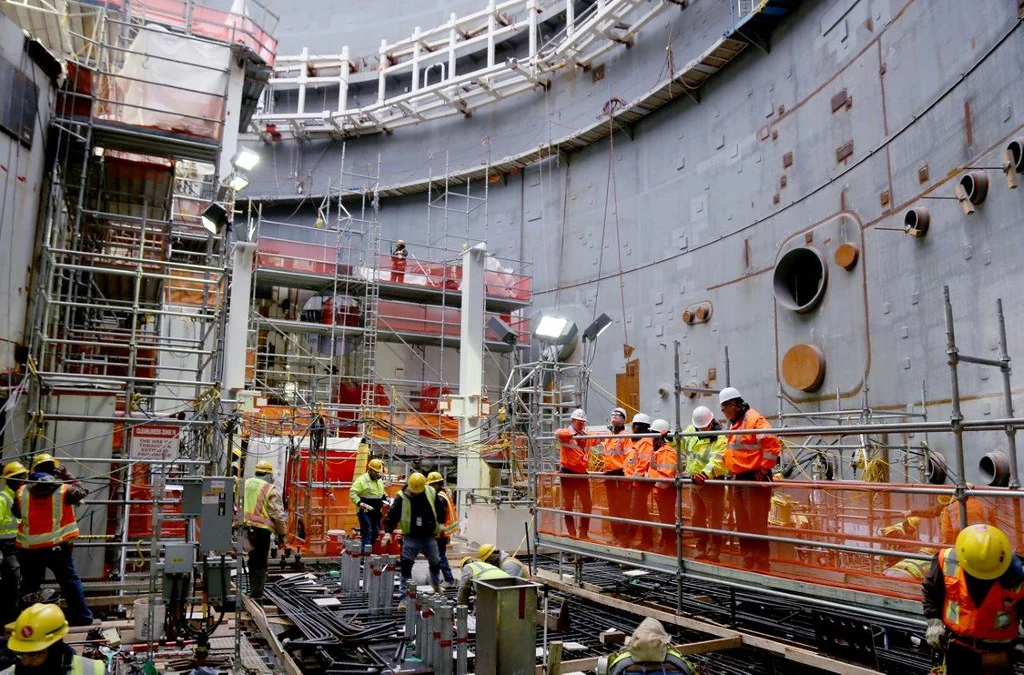
Protection means several measures working together: physical barriers to contain radioactive materials, systems to cool the fuel, training, independent oversight and emergency plans. None of these can be an excuse to neglect the others.
A reactor also cannot explode like an atomic bomb, because the fuel and conditions are different. Other accidents remain possible, including steam and hydrogen explosions.
There is no zero risk. The requirement is to reduce the probability and consequences of accidents and demonstrate this to the regulator.
Spent fuel stays hazardous for thousands of years. Where does it go?
Some material needs to stay isolated for a very long time. Spent fuel first cools in pools and can later move to dry storage.
Spent fuel starts in a pool, where water removes heat and shields radiation, and can move to steel-and-concrete containers once it has cooled sufficiently. These are the two stages of interim storage shown in the photographs.
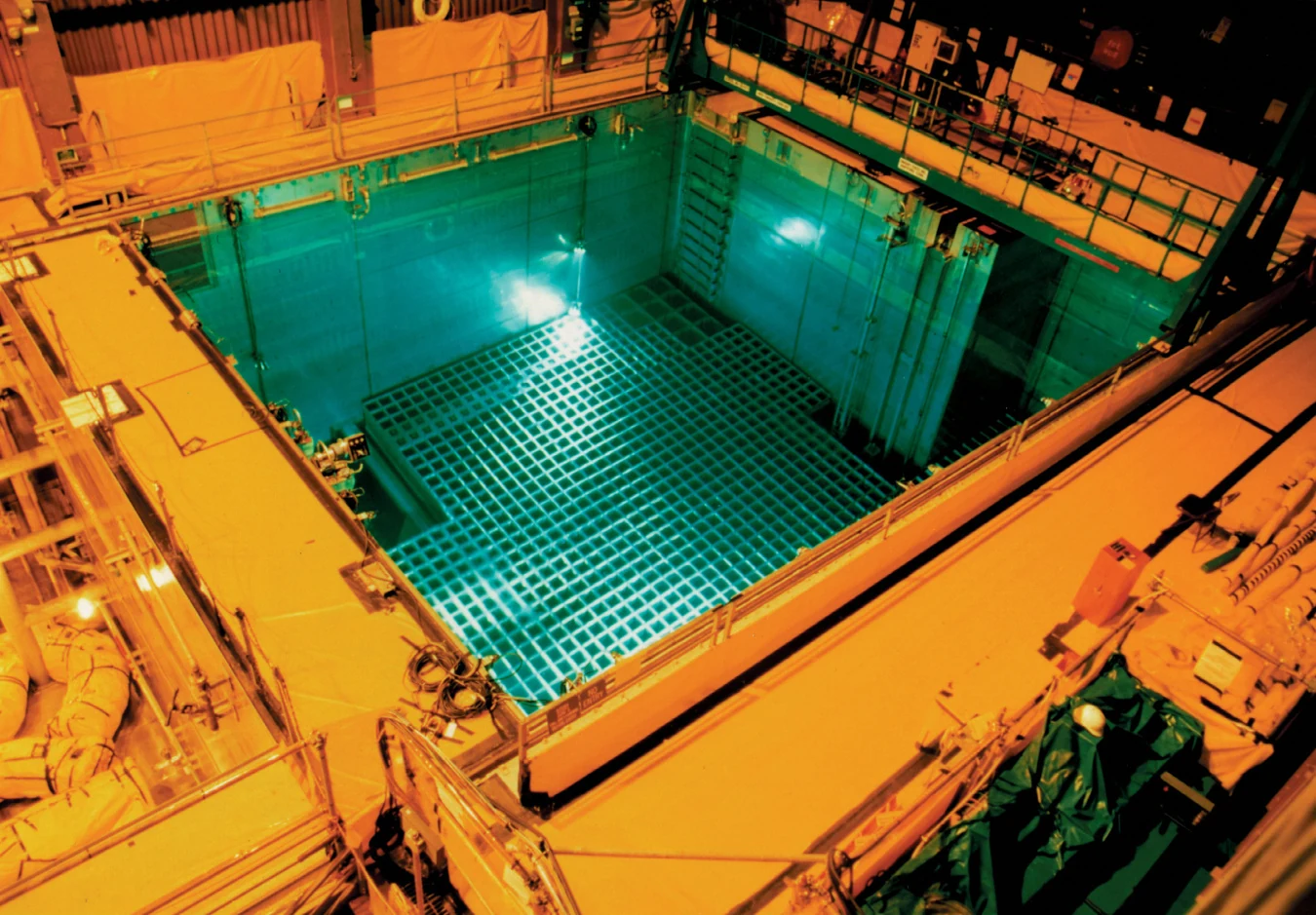
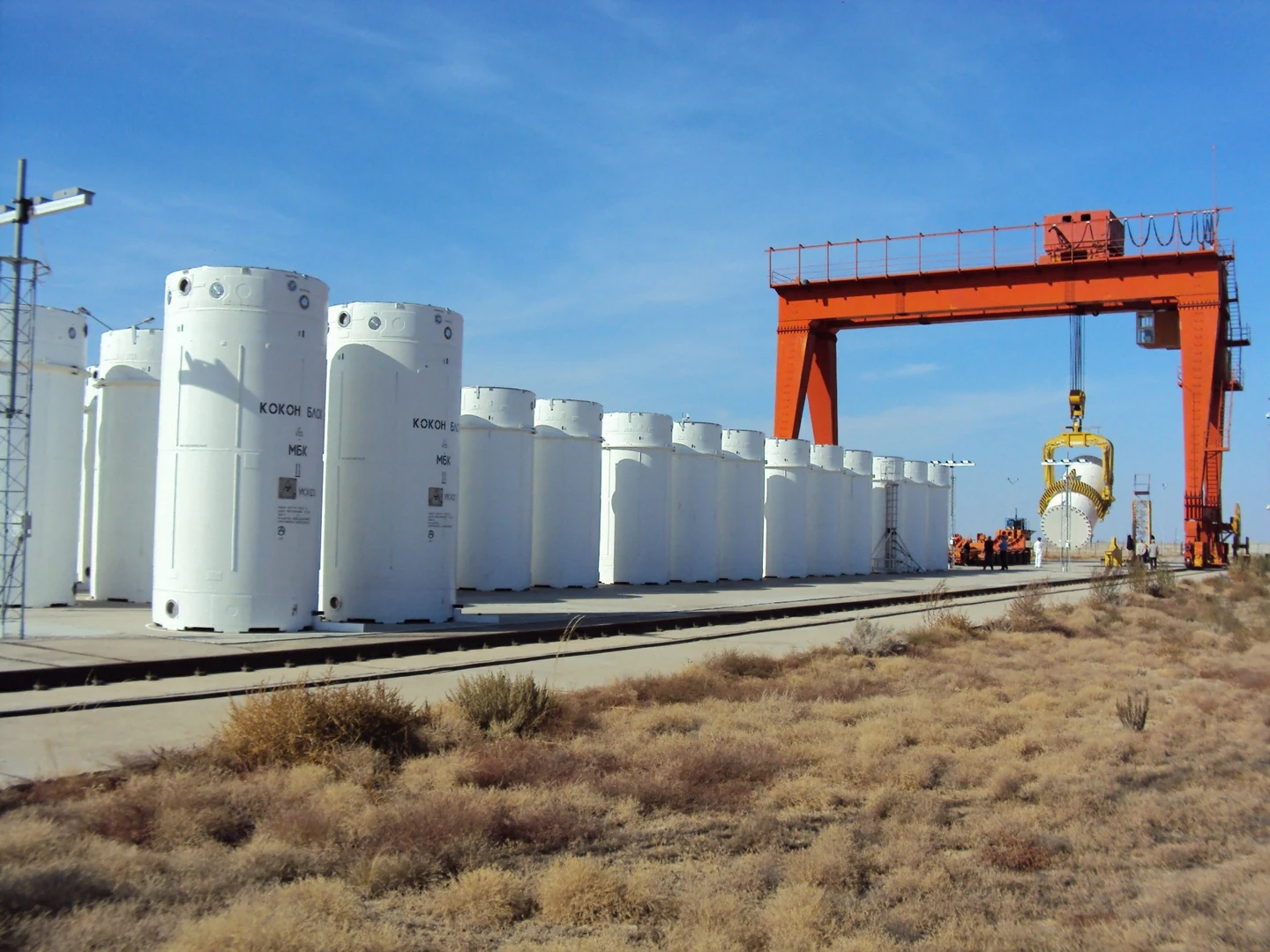
For final disposal, the reference solution is a deep geological repository: engineered barriers together with stable rock to isolate the material. This is the approach at ONKALO in Finland. Its operating licence was granted on 22 October 2026. According to Posiva, disposal still depends on tests, inspections and STUK approval.
Radioactivity decreases over time, at different rates for different materials. Managing it requires funding, lasting institutions and community involvement. Developing the technology is part of the work; putting it into practice remains each country’s responsibility.
A surface container and a geological repository have different roles. Storing fuel now does not remove the need to prepare the long-term solution.
What would a plant cost Portugal, and how long would it take?
Cost depends heavily on the design and financing. For a country starting a programme, preparing to build and operate its first plant takes years.
Investment begins long before the plant sells electricity and, if construction slips, interest keeps adding up, as the example below shows. Using a design already built elsewhere, working with experienced teams and securing stable financing can help control costs. Changing the design during construction, on the other hand, can make the project much more expensive.
What does waiting cost?
Imagine borrowing €100 and making no repayments during construction. Interest is added to the debt each year.
Debt after 10 years
Debt after 10 years
Portugal already has a regulator for radiological protection and nuclear safety: APA. A power programme would require stronger capacity, trained people and preparations for suppliers, financing and spent fuel management.
Based on international experience, the IAEA points to about 10 to 15 years from initial consideration to a country’s first plant entering operation. That is a reference, not a guaranteed schedule for Portugal.
This is why we want the option studied seriously. We would need to compare whole-system costs, emissions, land, dependence on imports and the time needed. Only that analysis could tell us whether the nuclear option adds value for the country.
There is no universal plant price or advance answer about the cheapest option for Portugal.
Still have a question?
Tell us what you would like to understand better, or suggest a question to add here.
Ask usWant to explore the analysis further?
Diogo Valada created a website about nuclear energy in Portugal that explores the technology, the electricity system and the decisions a Portuguese programme would involve.
Read the detailed analysis ↗Sources
- DOE · Fuel density (2024)
- JRC · Technical assessment of nuclear energy (2021)
- REN · Balanço elétrico / Electricity balance (2025)
- IEA · Nuclear Power and Secure Energy Transitions (2022)
- IEA · The Role of Critical Minerals (2021)
- EIA · Cooling systems that reuse water (2014)
- IPCC · AR5, Annex III, Table A.III.2 (2014)
- ARPANSA · Ionising radiation: questions and answers
- EPA · Natural Radioactivity in Food
- APA · RADNET
- IAEA · Chernobyl, INSAG-7 (1992)
- UNSCEAR · Fukushima, report 2020/2021
- CNSC · Design of Reactor Facilities, §6.1
- IAEA · Lifecycle of Nuclear Fuel (2019)
- NRC · Storage of Spent Nuclear Fuel
- Posiva · ONKALO: operating licence (22 October 2026)
- Posiva · Release barriers
- IAEA · Milestones, Rev. 2 (2024), pp. 2, 6–7
- APA · Missão IRRS / IRRS mission (2022)
Photograph credits
- Advanced Test Reactor · fundo / background · Argonne National Laboratory, 2009CC BY-SA 2.0
- Fuel pellet / Pastilha · NRC, 2010CC BY 2.0
- 1000 kg · mina Anna / Anna mine · Kamil Czaiński, 2025CC BY-SA 4.0
- Vogtle 3 · NRC, 2018CC BY 2.0
- San Onofre · NRC / DOEU.S. government
- Dry storage / Armazenamento seco · Sandia National Laboratories / NRC, 2014CC BY 2.0
Photographs resized and converted to WebP. The hero uses a responsive crop. Comparison images share a 3:2 frame. Photographs are framed to fill the rounded rectangles, with crops that preserve the subject. Each photographic derivative retains its original licence.